
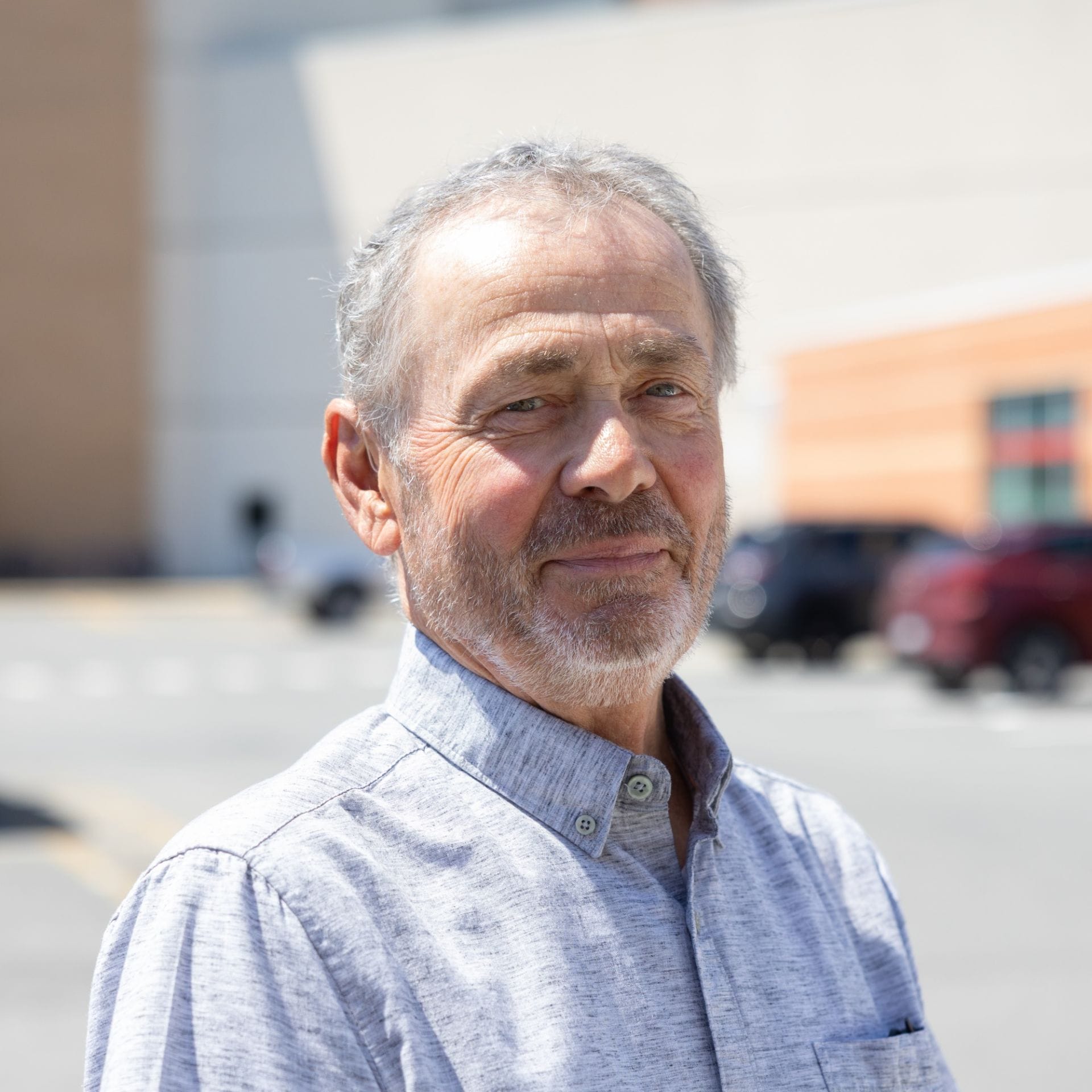
 In December 2024, my wife of 50 years, Maria, and I had plans to return to Edmonton for Christmas. Alberta was our previous home before we moved to Sidney, and still where so much of our family life is rooted, including our two children and our eight grandchildren. At 76, those family visits mean everything.
Then I received a call from my doctor.
‘I’m sorry, Roland,’ he said. ‘You’re not going anywhere.’
I had no real symptoms. Nothing that made me think something serious was happening. But routine bloodwork had raised a concern. When you’ve lived as active of a life as I have—working as a carpenter, staying physically fit, playing drums at church, able to do just about anything—cancer is not something you see coming.
I surprised myself in that moment. I didn’t think, Why me? but rather, Okay, what’s the next step? Still, cancer doesn’t happen to just one person. It happens to the people who love you, too. Maria has been amazing—over the top in her care for me—but it has been hard for her. I think sometimes it’s the person that doesn’t have it that hurts more.
The cancer was right at the end of my colon, in the rectum. Because of the tumour’s position in my lower cavity, I was told surgery would be complex; the first step would be rounds of radiation and chemotherapy with the hope of shrinking the tumour. That was a hard part of my journey. But through it, I discovered something I hadn’t expected: Cancer creates community. You’ve got something that brings you together, you empathize with the fear people face. Maria and I saw others in their worst moments, and we had opportunities to pray with some of them. To share the load together.
While we were going through all this, we were being cared for incredibly well by our local physicians and nurses—and that made it easier to care for others.
For a while, the treatment looked promising. But another colonoscopy and MRI showed the cancer had come back. This time, it was believed to have progressed to my prostate and possibly my bladder as well. That was sobering, and surgery became inevitable.
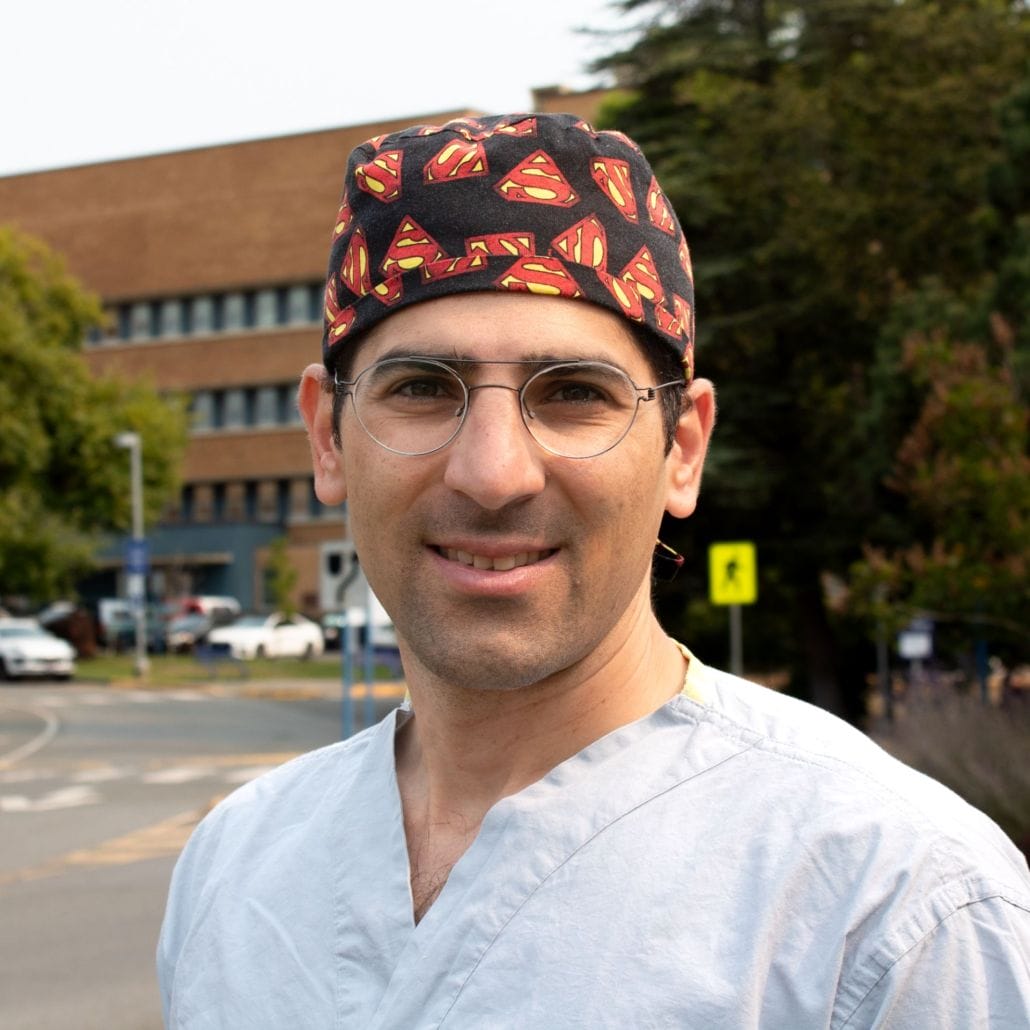
Dr. Sepehr Khorasani was my colorectal surgeon. From the beginning, I felt very confident in him. He is so gracious, and at the same time, so forthright with the medical realities of the situation. What I admire most is that I never felt like he was just about the business of surgery. He cares so much about people—about humanity.
Dr. Michael Metcalfe, my urologist, became involved as well. In my hometown of Edmonton, the Metcalfes are well known in the world of medicine, so we trusted him. In our first visit, he was incredibly thorough, while allowing us the gift of space to process.
Through these two remarkable doctors, I came to understand just how critical—and lifesaving—my surgery would be. How blessed, in a way, I was, too, by the option they would come to offer me.
My surgery was scheduled for October 22, 2025 at RJH. Drs. Khorasani and Metcalfe would make use of the latest robotic technology for a first-in-Victoria—and first-in-Western Canada—dual robotic surgical procedure.
Going into surgery, I felt very confident. I knew my faith would walk me through this, and I had equal confidence in Drs. Khorasani and Metcalfe.
Just before surgery, something happened that I will never forget: I was lying on the gurney, and they brought me into the room. Dr. Khorasani was standing near me, and he said,‘Roland, would you like to pray for us all?’ I prayed for everyone in the room. That really settled me right down.
During the surgery, Drs. Khorasani and Metcalfe removed my bladder, prostate, and rectum and I woke up with two ostomy bags. Life was different from that moment on. But because of their skill and the technology available, so was my future.
Without robotics, my recovery could have been far more painful, far more invasive, and far harder on my body. I could have needed multiple surgeries. Instead, robotics gave my surgeons the precision to perform an extraordinary procedure through keyhole incisions—turning what could have been two very traumatic open surgeries with two large incisions, into one I could begin recovering from almost immediately. It was still their expertise that saved me. Robotics helped make that expertise go further.
I spent only one week in hospital, which is incredible knowing how complex the procedure was. My doctors came every day to check on me, and every single nurse who entered my room served with such sincerity. One of them was Marilyn, my ostomy nurse. When you wake up with one bag—let alone two—it is overwhelming. You wonder, How is this ever going to feel normal? But Marilyn was so good: efficient, calming, and kind. She took the time to explain everything, and slowly, she helped me believe I could get onto this—and be okay.
That is what I remember most about my experience: the technology mattered, absolutely. But so did the people. The surgeons, nurses, and care teams we have here in Victoria all made it so much easier for me. They shared in my journey.
That is why, in turn, I am sharing my story, even when it can be hard to talk about the likes of rectal cancer. Because there are other patients like me—people who feel 100% healthy one day, then hear the word ‘cancer’ the next. People with spouses, children, grandchildren, and full lives they want to keep living. People who need to know that there is hope.
I feel blessed beyond words to live in a community where I was not left to face cancer alone. My surgeons came together with skill and courage. My care teams treated me with remarkable humanity. And donors—people I may never meet—made sure the technology was there when my life depended on it.