
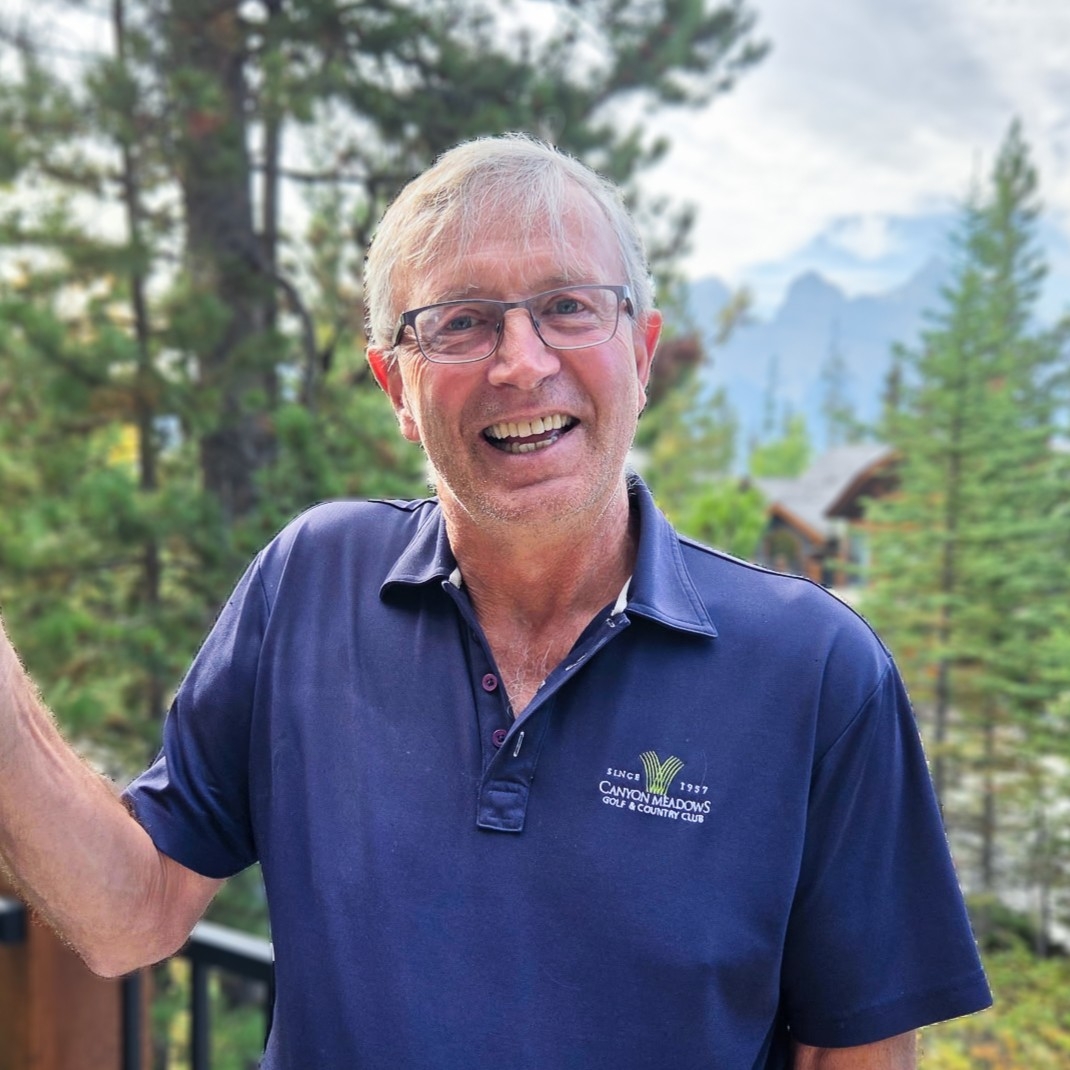
 When my wife, Diana, and I moved to Sooke in 2019, we felt like we’d found exactly where we were meant to be. We had lived all over, but we’d always been drawn to quieter places. Perhaps a reprieve from the many days I have spent in hospitals.
In 1977, I was walking when I was struck by a drunk driver. In an instant, my life changed. I suffered a traumatic brain injury and spent 31 days in a coma. When I finally opened my eyes, nothing felt real. It was as if I had woken up inside a movie I did not recognize.
Even now, my memory isn’t what it used to be. I lovingly call Diana my cerebellum because she remembers things I can’t. But after all these years, we’ve built a good life together. I’ve learned to adapt; I’ve even learned to walk again after being told I might never do that.
Because cancer runs in my family, my father always encouraged me to stay on top of routine screening. I listened to him. I did what I was supposed to do. So when I went for a routine blood test, I expected it to be just that: routine. Instead, I heard the words no one is ever ready to hear: I had prostate cancer.
Like most people, I just wanted the cancer gone. I wanted a plan. I wanted to know what came next. During my early appointments, I was told there were two main options: radiation treatment or surgery. In my mind, the answer was simple. I wanted surgery because I wanted it over with.
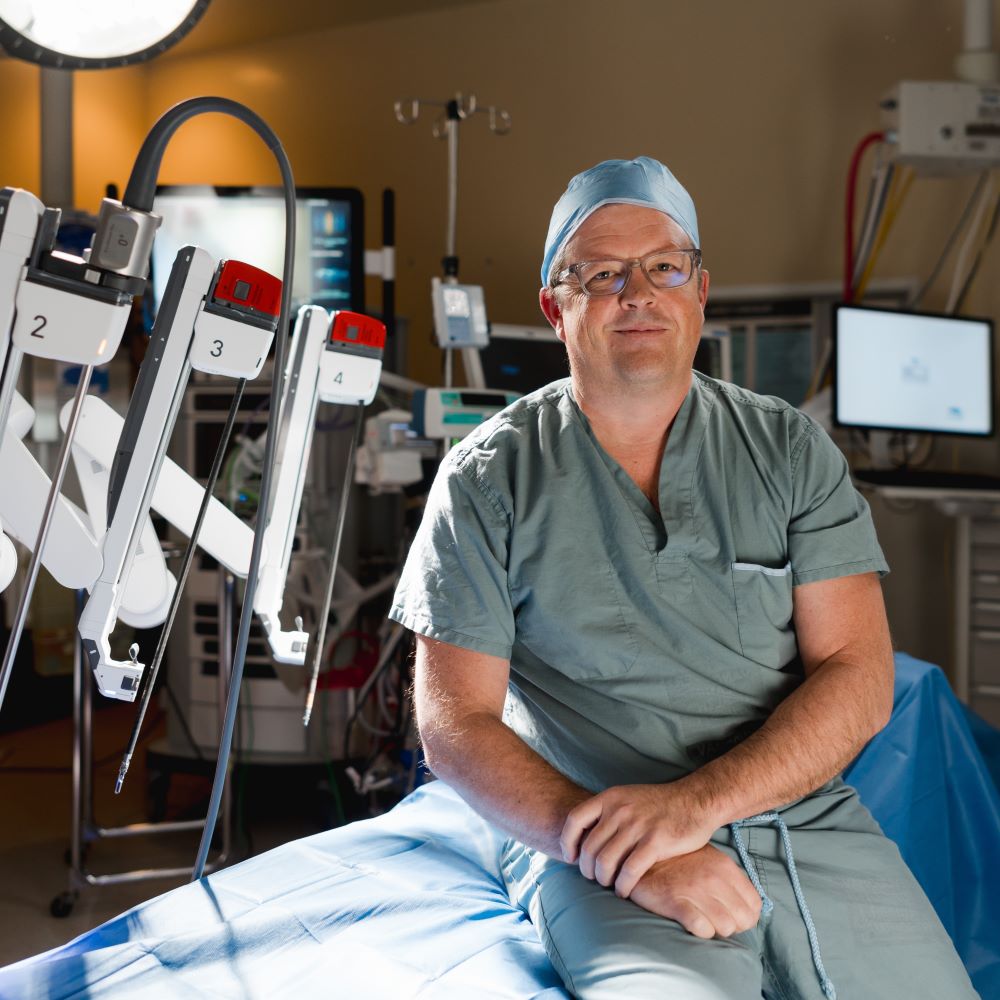
Then Diana and I met with Dr. McCracken, Urologist at RJH.
Dr. McCracken had looked carefully at my medical history. He understood what my brain injury had already taken from me—and what another difficult recovery could mean. Then he gently explained that surgery might not be the safest path, that it could be harder on my body, and the side effects could be worse given my medical history.
I remember sitting there with Diana as those words settled in. For a moment, it feltlike the ground had dropped out from under us. After everything I had already lived through—the accident, the coma, the long recovery, learning to walk again—it felt unbearable to think that an injury from nearly 50 years ago could still decide what options I had today when it came to fighting cancer.
It felt heavy. It felt unfair. It felt like one more thing was being taken away from us. Then something changed across Dr. McCracken’s face, and he said, “I’m going to talk to a colleague of mine who may have another option for you.” When Diana and I left that appointment, we carried something we had not felt moments earlier: hope.
Not long after, we met Dr. Vamshi Kotha, an Interventional Radiologist at RJH and VGH. From our first appointment, he gave us confidence. He was straight forward, thorough, and willing to answer every question we had.
What I remember most is how often he said the word I needed to hear: Yes.
Yes, I could get a procedure to remove the tumour. Yes, recovery would be quick despite my condition. Yes, I could get back to the life I was living before cancer.
Dr. Kotha explained that there was a newer, even highly minimally invasive treatment available through NanoKnife technology and the Interventional Radiology program. Instead of a traditional surgery, it could be done as an intervention through micro-incisions performed in an imaging suite. It was not the path we expected. But in that moment, it felt like a door we thought had closed was beginning to open again.
Then we learned something that stopped us in our tracks: if I moved forward, I would be the first patient in Western Canada to receive this treatment.
I cannot fully explain what that felt like. After decades, after all those years of hospitals, recoveries, and setbacks, learning how to live with what had happened to me, someone was offering an innovative solution. I felt fortunate. I felt grateful. And for the first time since hearing the word cancer, I felt like I could breathe again.
What made it even more meaningful was that I could receive this care close to home. At one point, we had considered travelling elsewhere to pursue treatment, but the cost of ferry travel, gas, accommodations, and medical appointments was a real concern. Being able to access this innovation right here lifted a weight from our shoulders.
On the day of the procedure, Diana and I drove in from Sooke to VGH. I was told there were even experts from the equipment manufacturers observing because the procedure was so new. The team took great care and made sure everything was done properly. I felt like I was in and out in no time.
I spent one night in hospital. The next morning, I woke up and could hardly believe the difference. Diana could see it in my spirit, too. What amazed me most was how quickly life returned to normal. I didn’t experience the kinds of side effects I had read about through other treatment journeys. I didn’t even need pain medication afterward. After everything I’ve faced throughout my medical history, that felt remarkable.
Today, I’m back at home doing the things I love. Spending time with family. Working around our property. Painting the deck in the sunshine. Not thinking about cancer.
The technology made all that possible, but so did the people behind it. Dr. McCracken, Dr. Kotha, and every nurse who cared for me treated me with compassion and respect. Diana and I felt confident every step of the way that we were receiving excellent care.
A cancer diagnosis can make you feel like your options are disappearing. We certainly felt that way when we were told surgery wasn’t possible in my case. Then, because my care team refused to stop at no, collaboration found another path: surgery working hand-in-hand with Interventional Radiology to give me a chance I did not know I had.
I have since come to understand that much of the momentum in innovation being felt by patients like me is because of the Victoria Hospitals Foundation’s It’s Time campaign, and that this next phase will double capacity for Interventional Radiology.
I want to say to the donors who will make care like this possible for more people like me: you are giving us hope when we need it most; you are giving families more time together; you are helping people stay close to home. You are making moments we feared we might lose possible again. I thank you profusely.