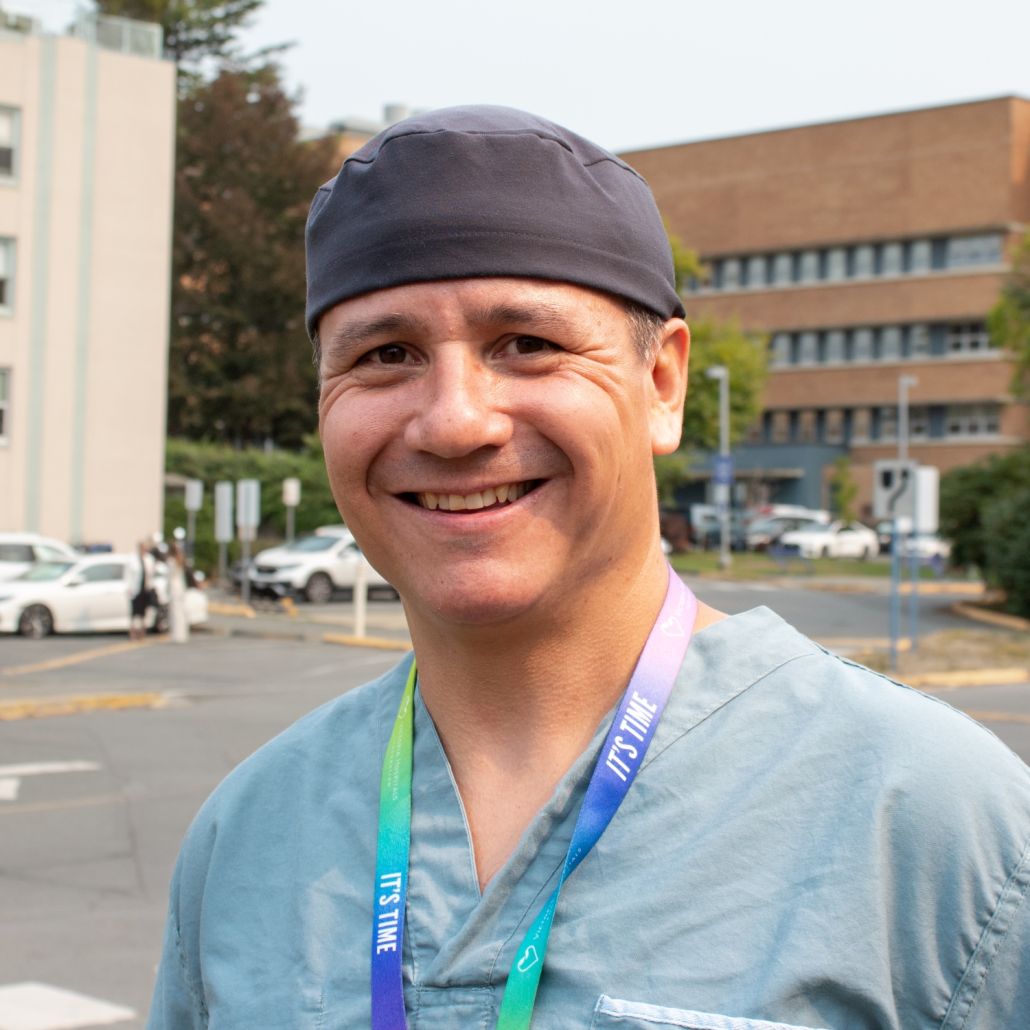

 As a retired physician and pathologist, I have seen how the word “cancer” changes everything. For many patients, treatment can often involve surgery—and with it, the search for answers. What patients want is simple: a cure, and the chance to return to the life they knew before cancer.
At Royal Jubilee Hospital, the da Vinci surgical robot—guided by skilled surgeons and supported by dedicated care teams—is transforming what recovery looks like for patients who undergo surgery. I know this firsthand. Following my own colon cancer diagnosis last fall, their care—and this technology—helped me recover, heal, and move forward.
Months before the surgery, subtle warning signs appeared. While travelling in Italy last spring, I experienced an overwhelming fatigue that felt unusual for me. Always energetic, I brushed it off, blaming my age (I’m 76) and my busy life, but the situation became impossible to ignore when I noticed blood in my stool. My doctor referred me to gastroenterologist Dr. Brenden Smith, who confirmed the presence of a two-centimetre tumour on my colon.
As the diagnosis settled in, the road ahead also became clearer. I had spent more than 30 years practicing medicine before retiring in Sooke, most recently at the Royal Alexandra Hospital in Edmonton, where I worked as a physician and pathologist. Now, the roles were reversed: I was the patient, and my pathology was being reviewed by another physician. Surgery was identified as the next step in treatment.
When I met general surgeon Dr. Cailan MacPherson, I was immediately impressed. As he explained the benefits of robotic surgery, I was so glad this technology was available to me. The precision and control offered by the robotic system allowed for targeted tumour removal while supporting a faster recovery. Having now experienced the benefits firsthand, the impact is undeniable. The technology offers a remarkable recovery from major cancer surgery and endless possibilities in efficiency and cost savings for the health care system. Shorter hospital stays translate into post-op reductions of serious medical complications with reduced strain on healthcare teams, laboratory and diagnostic resources.
Throughout my career, I had seen the challenges patients faced after major surgery—when serious complications can impact patient outcomes including infections, large incisions, and long recoveries that could stretch into weeks. My experience was completely different—I was home within 48 hours and recovering comfortably. It underscored the power of this technology, and its benefits are not limited to cancer surgery. The positive impact will be obvious in many other surgical areas, including women’s health and the treatment of benign conditions.
Today, I’m focused on what’s next—staying healthy, exercising daily, and looking ahead to my next hike and my next trip.
I greatly appreciate Dr. MacPherson and the entire team on 7N at Royal Jubilee for their professionalism and dedication to patient care. Thanks to generous donor support, innovation is leading to real impact—and it’s just the beginning in this boundless field of medical innovation—helping patients heal sooner, regain strength, and return to their lives.